James Isaac Kay

Perception and edge-AI engineer. I build real-time detection, sensor-fusion and video-timing systems on embedded NVIDIA hardware, for autonomous boats, drones and dashcams. Part of Embry-Riddle's Team Minion, 2022 Maritime RobotX champions. Founder of MOAT Safety.

  • Houston, TX, open to relocation
  • U.S. citizen, willing to obtain clearance
  • M.S. ECE, Embry-Riddle (Nov 2026)
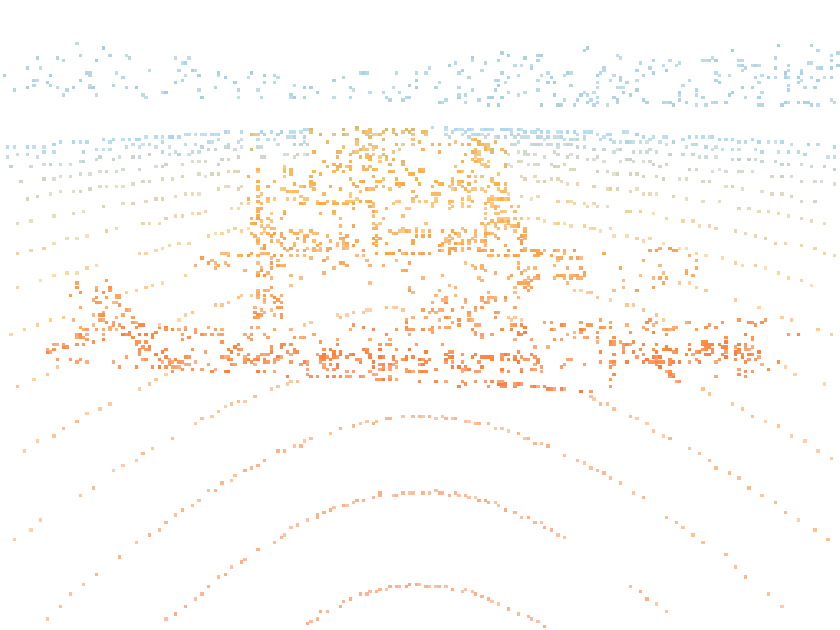
Minion, Team Minion's WAM-V autonomous boat, drawn as a stylized point cloud generated from a photo
Minion, the WAM-V, as a stylized point cloud generated from a photo. Move across it to occlude the sensor.

About

My work on MOAT Safety began in July 2025, and I registered it as a Texas sole-proprietorship DBA in July 2026. Through MOAT Safety I offer aerial survey and photogrammetry, and I am building DashStar: edge license-plate recognition designed to check dashcam video only against official public alerts, on a ~$600 NVIDIA Jetson node. DashStar is the research prototype for my M.S. thesis at Embry-Riddle, which I defend in November 2026. As a teaching assistant I also mentor 27+ seniors across six capstone robotics teams.

I am an FAA Part 107 remote pilot and an SDI Open Water scuba diver, and I hold a B.S. in Applied Mathematics from Southern Methodist University.

Tools I work with lately:

  • Python
  • C/C++
  • GStreamer
  • DeepStream / Savant
  • TensorRT
  • ROS 2
  • PX4 / MAVROS
  • OpenTelemetry

Recognition

  • 2022 Maritime RobotX: 1st of 20 international teams (Team Minion)
  • 2024 Maritime RobotX: 3rd overall and Best Technical Design Report (Team Minion)
  • Passed NCEES FE, Electrical and Computer
  • FAA Part 107 Remote Pilot
Team Minion with the 2022 Maritime RobotX Challenge champions banner
Team Minion, 2022 Maritime RobotX champions. Photo: Team Minion / ERAU.

Experience

Founder & Lead Engineer @ MOAT Safety

Jul 2025 - Present

Work began in July 2025. Registered as a Texas sole-proprietorship DBA in July 2026.

  • Building DashStar, the research prototype for my M.S. thesis: edge license-plate recognition on a single ~$600 NVIDIA Jetson Orin Nano node. It checks dashcam video only against official public alerts that include a vehicle or plate, such as AMBER, Silver, Endangered Missing and stolen-vehicle alerts, plus Blue and Yellow suspect alerts in the states that issue them.
  • Built a 9-service DeepStream/Savant pipeline (YOLOv8n, LPDNet, NvTracker, LPRNet on TensorRT FP16) with ZeroMQ IPC, multi-camera routing and ±2 s evidence clips; 28 to 33 fps offline at 1080p.
  • Cut duplicate reads about 1000× (2,286 raw plate reads to 1 event) with track-keyed deduplication, and reconciled 358 raw state alerts into 200 canonical cases with an email-ingest and OCR pipeline.
  • Cut 13 tagged prototype releases in 17 days, each gated by 300+ automated pytest and bash smoke tests; instrumented with OpenTelemetry, Loki, Tempo, Prometheus and Grafana, and root-caused a ~10 fps live-throughput ceiling under multi-container load.
  • Offer aerial survey and photogrammetry through MOAT Safety as an FAA Part 107 remote pilot.

Graduate Researcher, AI & Autonomy @ Embry-Riddle

Aug 2023 - Present

Thesis: "Distributed Edge ALPR System Using Savant Framework: Low-Cost Architecture for AMBER Alert Detection via Wireless Dash Camera" (defense Nov 2026).

  • Built ~13K-image annotated driving datasets and trained a custom YOLOv8 vehicle detector; evaluated it against NVIDIA's pretrained TAO models and adopted YOLOv8n with LPDNet/LPRNet (TensorRT FP16).
  • Developed a hyperbola-based anisotropic undistortion method for wide-angle dashcam lenses; ChArUco calibration at ~0.5 px reprojection error.
  • Teaching Assistant, Mechanical Engineering: mentor 27+ seniors across six capstone robotics teams (RoboBoat, EcoCAR, VTOL UAV, quadruped, soft robot) on requirements (INCOSE), safety, design reviews and technical reporting.
  • Graduate Research Assistant, Biomechanical Analysis Lab (Spring 2024): measured intraocular and blood pressure in an IRB-approved spaceflight-analog study of Spaceflight-Associated Neuro-ocular Syndrome (SANS), published in Aerospace Medicine and Human Performance (2026).

REC In progress: the distributed multi-node architecture, and camera-frustum modeling against IEC/EN 62676-4:2025.

UAV/ASV Software Engineer & Pilot-in-Command @ Team Minion, ERAU RobotX

Sep 2022 - Sep 2025

  • Built GStreamer pipelines in C and Python that stamp each frame's capture time into the H.264 stream (SEI NAL units and RTP header extensions) and publish it in ROS; measured ~110 to 120 ms of video latency and a ~35 s inter-host clock offset, closed with chrony, enabling camera-LiDAR fusion at >15 fps underway.
  • Co-developed the Minion WAM-V vision system: 3 Livox LiDARs, 3 4K cameras and a Sony IMX490 HDR camera on a Jetson AGX Xavier covering 160° of the bow.
  • FAA Part 107 pilot-in-command for all autonomous flight tests; co-developed vision-based UAV precision landing at 16.23 cm average error, and in 2022 built a 5 kg quadcopter that took off from and landed autonomously on the WAM-V.
  • Co-developed multi-mode PID and inverse-kinematic thrust allocation for the over-actuated WAM-V, designed a custom PCB for the azimuthing motor pods, and migrated Minion and the UAV from ROS 1 to ROS 2.

Publications

  • I. Kay (with D. Lane, E. Coyle), "Vision System," and I. Kay (with M. Abe, S. Sarkar, R. Vinnakota, E. Coyle), "UAV Precision Landing Using Image Recognition and Control," Apps. D-E in A. Lachguar et al., "Minion: Design and Competition Strategy for the 2024 Maritime RobotX Challenge," RoboNation Technical Design Report, 2024. Best Technical Design Report.
  • D. Holland, …, J. Kay, …, "Design of the Minion Research Platform for the 2022 Maritime RobotX Challenge," RoboNation Technical Design Report, 2022.

Freelance Drone Operator & CV Engineer @ Plantex Equipment

Jun 2025 - Present

  • Aerial photogrammetry and 3D modeling of industrial plants.
  • Orthomosaic stitching and image-based defect analysis for equipment audits.
  • Part 107 flight operations.

Application Engineer / Jr. Systems Architect @ Unique Software Development

Mar 2020 - Jul 2021

Before that, Robotics Software Engineer Intern, Jun 2019 to Mar 2020. Dallas, TX.

  • Project lead for the MakerCause COVID-19 PPE program: ran a print farm of 116 FDM and 2 SLA printers that produced 30,000+ reusable masks donated to UT Southwestern, Medical City, Parkland and other DFW facilities.
  • Rapid-prototyped 160 PEEP valves in biocompatible resin for UT Dallas Bioengineering and UT Southwestern to return ventilators to service, plus nasopharyngeal swab prototypes.
  • Built a prototype autonomous survey boat for SimpleUnmanned (sonar and down-imaging) that mapped lake beds and computed volumetrics without GPS.

Systems

Resume (PDF)
DashStar pipeline as designed, on one in-vehicle Jetson node: dashcam video, vehicle detection, plate detection and tracking, plate reading, then a check against official public alerts. As designed, non-matches are discarded on the device and a possible match goes to human review. as designed: one in-vehicle Jetson node dashcam video YOLOv8n vehicle LPDNet + tracker LPRNet (TensorRT) check against official public alerts no match: discarded on device possible match: human review
The design, not today's prototype. As designed, a read with no match is discarded on the device, and a possible match goes to a human reviewer.

DashStar by MOAT Safety: edge plate recognition for public alerts

Founder and lead engineer since July 2025. Research prototype for my M.S. thesis.

DashStar is designed to read license plates on an in-vehicle edge node and check them only against official public alerts that include a vehicle or plate. Examples are AMBER, Silver and Endangered Missing alerts, stolen-vehicle alerts, and suspect alerts such as Blue and Yellow alerts in the states that issue them. Drivers never follow or engage. Today the prototype pipeline runs on one ~$600 NVIDIA Jetson Orin Nano at my desk, on recorded dashcam footage.

Status: research prototype. There is no live network yet, no real-world match has happened, and accuracy has not been measured yet. Unlike the design, the prototype keeps its plate reads and evidence clips on the device: they and the footage it has processed are my own research dataset, kept separate from the product.

  • 28-33 fps offline at 1080p
  • ~2.8 s match to evidence clip, offline tests
  • 2,286 to 1 raw reads to one event
  • 13 releases, 300+ tests

9-service DeepStream / Savant pipeline, TensorRT FP16, ZeroMQ, OpenTelemetry, Loki, Tempo, Grafana

The commitments DashStar is designed around
  • Non-matches are discarded on the device within seconds.
  • No location trail. Every match event carries the location and time of the sighting, because a sighting is useless without them. Nothing else ever carries a location, and drivers acknowledge this when they opt in.
  • A human reviewer confirms every match before anyone is contacted. By default the driver hears only "do not follow". A driver who opts in can also see match notifications, marked unconfirmed, with the number to call, after agreeing not to handle them while driving. Drivers never follow or engage, ever.
  • Training capture is opt-in only.
  • Accuracy will be published, along with a quarterly transparency report.
  • It matches only against official public alerts that include a vehicle or plate, never private watch-lists or ad-hoc plate requests. The full list of alert types is published only after per-state verification.

DashStar will never sell data, integrate with police networks or pay bounties.

As designed, what leaves the device for review is a cropped image plus the location and time of the sighting. The crop shows the vehicle and its plate by default, or just the plate when the vehicle crop is too large or the vehicle is not fully in frame. Other vehicles' plates and bystanders' faces in the crop are blurred on the device, and no video leaves the device. The reviewer on the MOAT Safety desk confirms each match and then calls the non-emergency number for the alert's area, or the hotline named in the alert. The location and time go to the authorities only after that confirmation. During the pilot, that reviewer is me. Vetted volunteer reviewers may assist, but they see the cropped image only, never the location or call details. Drivers give consent once at setup and can revoke it anytime. The planned DashStar Network is free.

Six camera frames of a lake shoreline and a boat with LiDAR returns projected onto them in blue
LiDAR returns projected into camera frames.

Frame-time stamping for camera-LiDAR fusion on Minion

Team Minion, Maritime RobotX. UAV/ASV software engineer, 2022 to 2025.

GStreamer pipelines in C and Python stamp each frame's capture time into the H.264 stream (SEI NAL units and RTP header extensions) and publish it in ROS. This replaced a constant-offset alignment that failed in rapid turns.

  • ~110-120 ms measured video latency
  • ~35 s clock offset found, fixed with chrony
  • >15 fps camera-LiDAR fusion underway

C, Python, GStreamer (RTSP/RTP, SEI), ROS / ROS 2, Jetson AGX Xavier, Gazebo VRX

Drone camera view of a green and a red buoy on the water, each inside a detection box
UAV vision over the course. Photo: Team Minion / ERAU.

Vision-based UAV precision landing

Team Minion. Co-developer and FAA Part 107 pilot-in-command.

Rule-based detection and PX4/MAVROS velocity control bring the drone down on its target. I was pilot-in-command for all of the team's autonomous flight tests under Safety-Review-Board-approved procedures.

  • 16.23 cm average landing error (2024)
  • 5 kg quadcopter, ship-deck landing (2022)
  • Part 107 PIC, all autonomous tests

PX4, MAVROS / MAVLink, Pixhawk, SITL / HITL

Illustration of lens undistortion: a curved wide-angle grid mapped to a rectified grid. wide-angle to rectified, ~0.5 px reprojection error

Thesis: a low-cost distributed edge ALPR system

Graduate researcher, Embry-Riddle. M.S. defense Nov 2026.

"Distributed Edge ALPR System Using Savant Framework: Low-Cost Architecture for AMBER Alert Detection via Wireless Dash Camera." I built ~13K-image annotated driving datasets, trained a custom YOLOv8 vehicle detector and evaluated it against NVIDIA's pretrained TAO models, and developed a hyperbola-based anisotropic undistortion method for wide-angle dashcam lenses.

  • ~13K annotated images
  • ~0.5 px ChArUco reprojection error

REC In progress: multi-node architecture and IEC/EN 62676-4:2025 frustum modeling.

Other systems

  • Public-alert feed reconciler

    Email ingest and OCR that reconciled 358 raw state alerts into 200 canonical cases.

    Python, getmail6 / IMAP, PyTesseract

  • Edge observability stack

    Traces, logs and metrics for the DashStar pipeline; found the cause of a ~10 fps live-throughput ceiling under multi-container load.

    OpenTelemetry, Loki, Tempo, Prometheus, Grafana

  • WAM-V thrust allocation

    Multi-mode PID and inverse-kinematic thrust allocation for an over-actuated boat with azimuthing thrusters.

    C++, Python, ROS, controls

  • ROS 1 to ROS 2 migration

    Moved Minion and the UAV from ROS 1 (Noetic) to ROS 2.

    C++, Python, ROS 2

  • SITL / HITL validation

    Validated control and vision in Gazebo VRX simulation before on-water tests.

    Gazebo VRX, PX4, ROS

  • Anisotropic dashcam undistortion

    A hyperbola-based undistortion method for wide-angle dashcam lenses, calibrated with ChArUco boards.

    Python, OpenCV, camera calibration

Hardware

  • Minion, the WAM-V, docked, with its sensor payload and a drone on deck

    Team Minion

    Minion vision system

    Camera and LiDAR coverage of 160° of the bow. I worked on this system with the perception lead from 2022 to 2025.

    3× Livox LiDAR, 3× 4K cameras, Sony IMX490 HDR, Jetson AGX Xavier

  • Quadcopter frame on a workbench, with motors, wiring and a wooden mount marked front and aft

    5 kg ship-deck quadcopter

    Took off from and landed autonomously on the WAM-V after an over-water task (2022).

    Tarot 680 Pro configured as a quadcopter, Pixhawk, PX4

  • DashStar edge node

    The research prototype: plate recognition on recorded dashcam video, run on a Jetson at my desk. The design puts it in the vehicle.

    NVIDIA Jetson Orin Nano, DeepStream / Savant, TensorRT FP16

  • Azimuthing motor-pod PCB

    A custom board for the motor-control pods that steer Minion's azimuthing thrusters.

    PCB design, motor control, WAM-V

  • 16.8 ± 0.2 m/s

    RANGER coilgun turret

    Vision-guided turret for a graduate mechatronics project (2023), with a high-voltage safety SOP; muzzle velocity measured over 20 trials.

    350 V / 4,700 µF, SCR switching, Python / OpenCV, dual-axis steppers

  • 30,000+ masks donated

    MakerCause print farm

    Reusable masks for DFW hospitals during COVID-19, printed in 2020.

    116 FDM + 2 SLA printers

Field Log

Photos from the water, the air and the bench.

A small game: steer a WAM-V through five buoy gates with the arrow keys or WASD. Space holds station, Escape exits.